Tools / 2026 / Live in the browser
Shelf Check
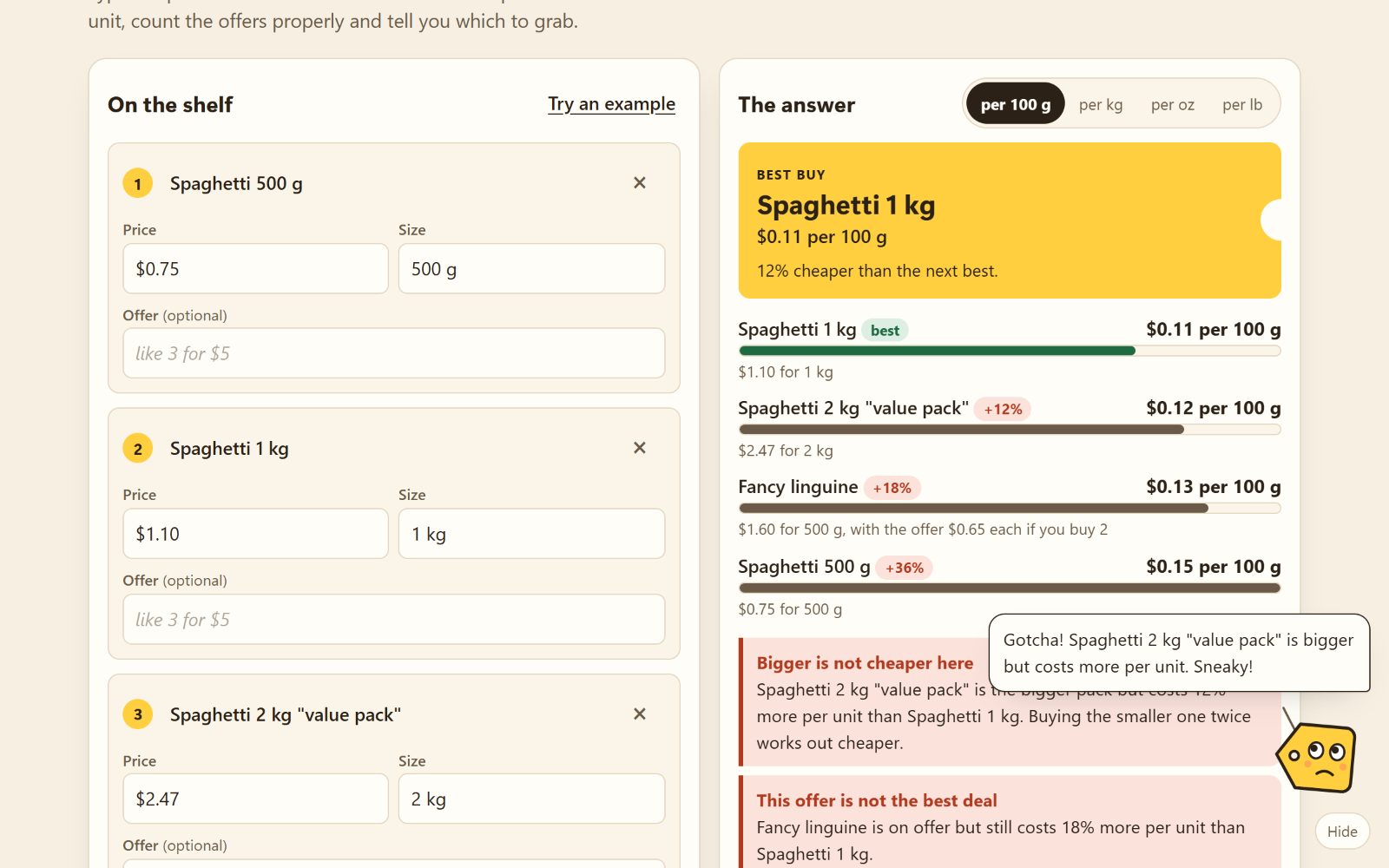
Type what each shelf label says and see which pack is really cheaper, per 100 g, per litre or per item, with multi-buy offers counted properly. Tag, a price tag mascot, points out the traps.
01
The problem
Bigger packs are supposed to be cheaper per unit, and often they are not. A 2026 study of 38 New Zealand supermarkets found a quantity surcharge on about a quarter of products sold in several sizes, and Which? found a 2 kg spaghetti bag labelled better value that cost 27p more than two 1 kg bags. The shelf's own unit price is no safe guide either: New Jersey fined Walmart $1.64M after inspectors found over 2,000 tags using the wrong unit, with similar products priced per can, per pound or per 100-count. Unit prices also ignore multi-buy offers, so shoppers end up doing division in their head in the aisle.
02
How I approached it
The parser reads labels as they are printed rather than asking people to pick units from dropdowns: 2 lb 4 oz, 1/2 gal, 6 x 330 ml, 3,49 €, 99p, and offers such as 3 for $5, 2/$5, buy 2 get 1 free and 2nd half price. Every size converts to grams, millilitres or items with exact factors, every offer becomes a price per pack plus how many you must buy, and the answer starts in the unit the labels use so it can be checked against the shelf. Items within 1% count as a tie so label rounding never picks the winner, and an item sold by a different kind of unit is left out with a reason instead of guessed. The engine has no DOM and runs the same in the page and under node:test. A network-first service worker keeps it working with no signal in the store.
03
The outcome
A ranked list with bars, a best-buy card that says when you have to buy several, warnings for a bigger pack that costs more per unit and for an offer that still loses, and a yearly saving at how often you buy it. On the pasta example the 2 kg value pack comes out 12% dearer per 100 g than the 1 kg bag. 14 tests with no dependencies cover sizes, prices and offers in every format above, ranking, ties, the two traps and the saving. Checked in Chrome at 375 px in dark mode and at desktop width, and offline after one visit.
04
The mascot
Tag is a price tag drawn in inline SVG. Tag's eyes follow the pointer, or the field being typed in on a phone, and Tag thinks while you type, cheers at a clear winner and frowns at a trap, naming the item in a speech bubble. Tapping gives a tip for the current step, such as what sizes can be typed when the list is empty. Everything Tag says goes through an aria-live region, one tap hides Tag for good, and nothing moves under reduced motion. The point is speed in the aisle: the warning arrives where the eye already is.
05
What I learned
Most of the work was in reading what people actually type. Fractions, decimal commas and 2/$5 all look obvious until a parser meets them, and a size like 16 oz has to stay weight while 16 fl oz is volume.
Also shipped the same day: load-shedding-lab got client-side adaptive throttling from the Google SRE book, checked against a fluid model, plus a README with a side-by-side results table. See the commits ↗
Related work
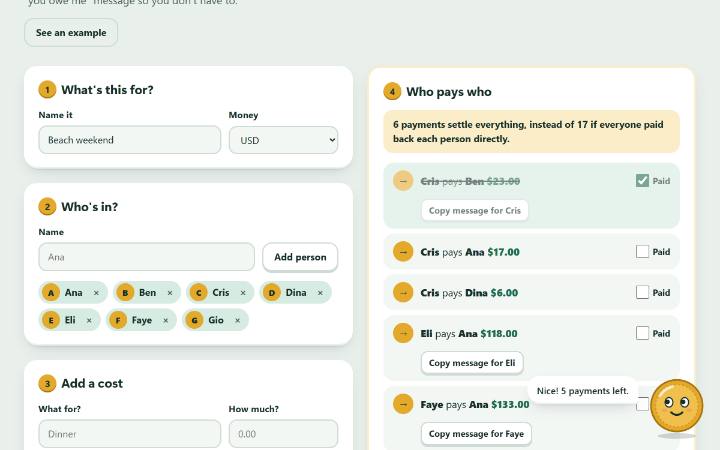
Split costs with friends and settle up in the fewest payments. EvenUp writes the pay-me-back message for you, and Penny, a coin mascot, helps along the way.
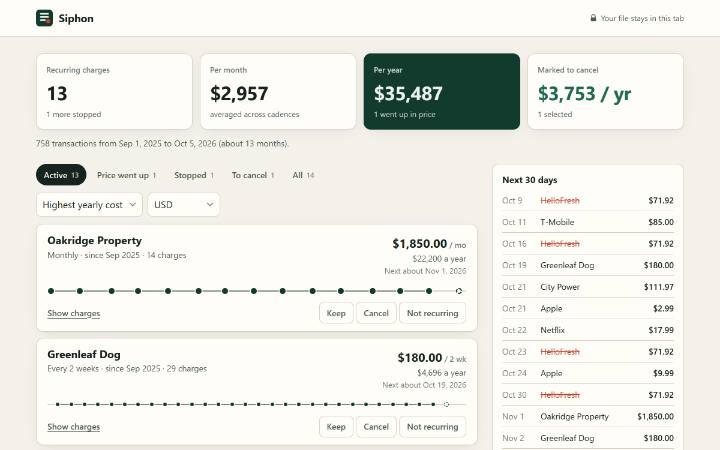
Drop in a bank or card CSV and see every recurring charge: what it costs a year, which prices went up, which ones stopped and when each renews. The file never leaves the browser tab.
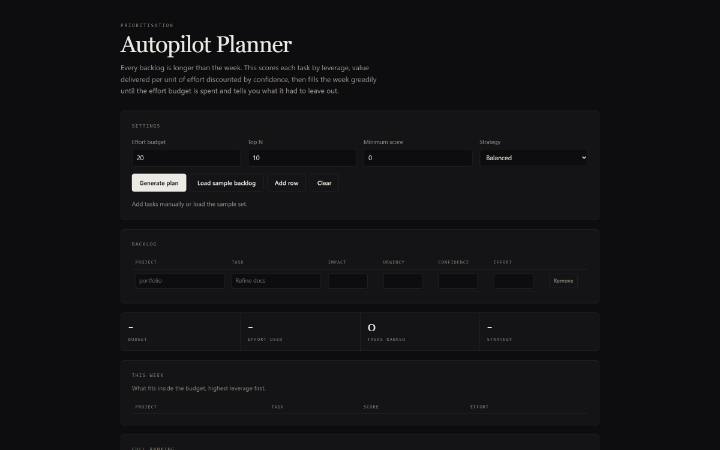
Scores a backlog by leverage, value per unit of effort discounted by confidence, then packs the week against a real budget and tells you what it left out.